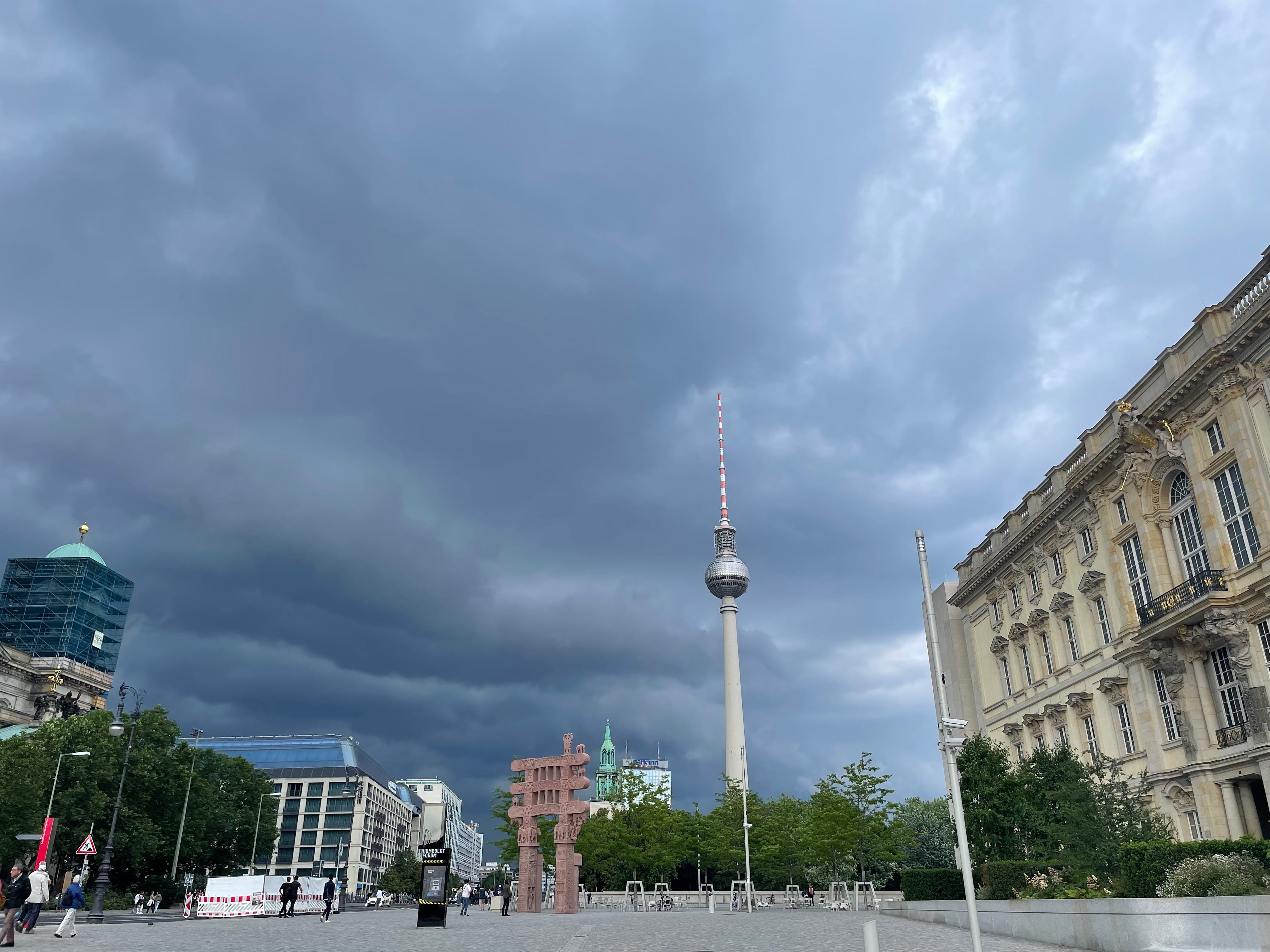
Berlin, part 2
Concluding thoughts on the BAI program

Lael and I left Berlin this morning. I came away from my studio program with mixed feelings. For the first week, I felt completely out of place and insecure. Each of the other nine artists seemed to have an artistic position and an intention for the month. Most were working on conceptual and abstract work, like experimental film and sculptural installations. Even the figurative painter told me she was there because she needed to incorporate more contemporary and abstract elements in order to get galleries interested in her work.
Meanwhile, my ideas about my own artistic position were very muddy. I kept describing myself to the other participants as “not really an artist.” I wanted to focus on learning to draw well, but the program directors seemed more interested in talking about unlearning. I was happy to chat about what makes art art, but I wasn’t that interested in actually making art that asks this question, or in the idea that all contemporary art has to ask this question, in an ironic and cynical way, in order to even be considered art. So I felt discouraged, but I kept showing up, making drawings, and actively participating in the classes and discussions, even when they weren’t in my wheelhouse.
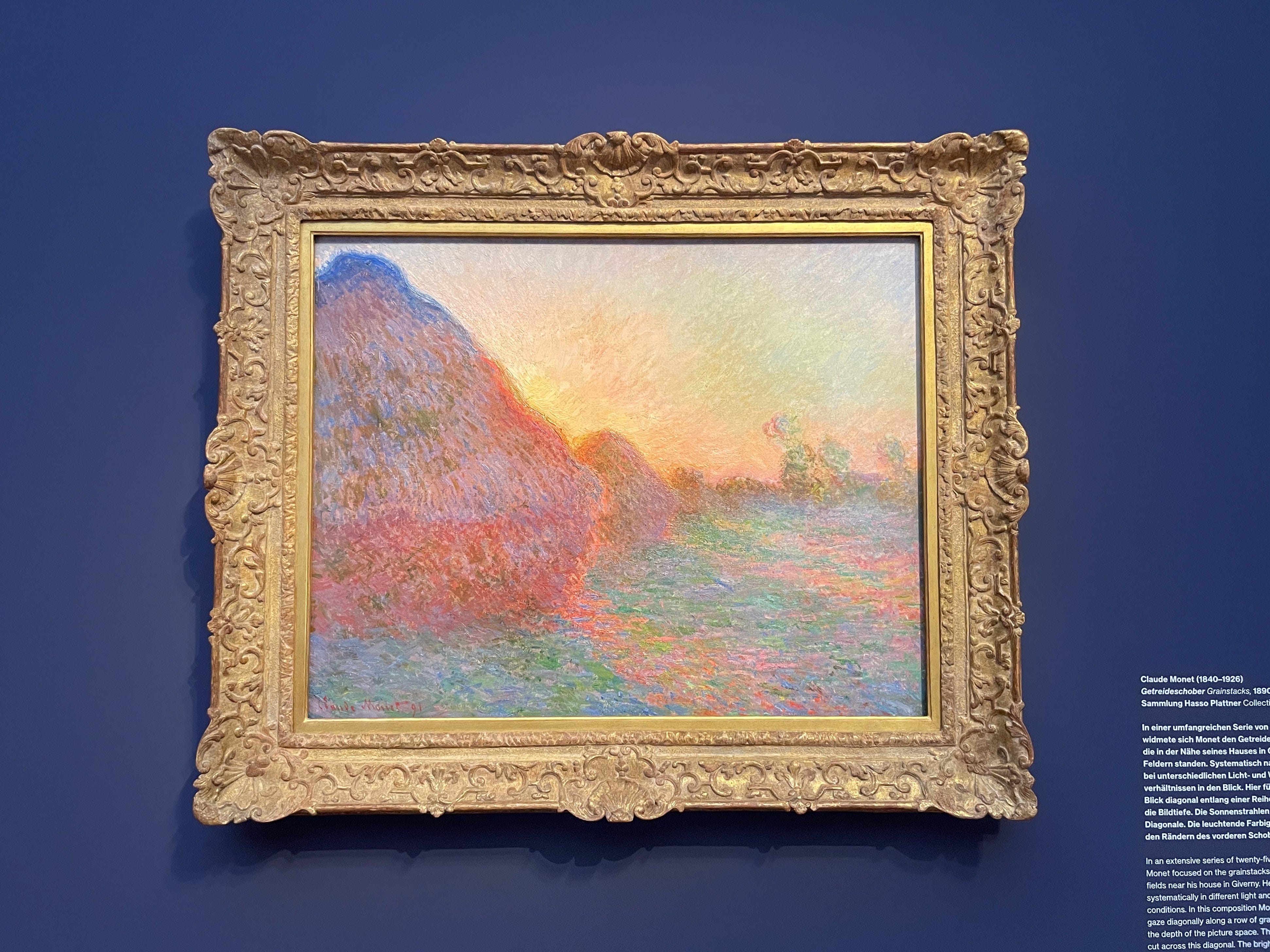
I felt a turning point around the month’s halfway mark. That weekend, I visited the Museum Barberini in Potsdam, and among the Monets and Seurats, this realization clicked: Impressionism was so radical at the time – it was a breakthrough, a pushing of boundaries – but I can understand why the art that’s displayed in contemporary museums today doesn’t look like these paintings. I can even understand, although I don’t agree with, the near-contempt for “decorative arts” that I’d been encountering. A skilled painter working in Monet’s style today, making something beautiful for someone to hang above their sofa, is more similar to an interior designer, or even to a fine craftsperson like a potter or a knitter, than to a conceptual artist like Nina Katchadourian or Charlotte Posenenske, unless they add some special sauce coming from their own artistic position.
Relatedly, I thought a lot this month about art vs. craft. My understanding before this program, which was informed by my love of knitting and pottery and especially by my time in Japan, was that the distinction is an arbitrary and often gendered division of skills into categories – fiber art is historically feminine and therefore crafty, painting is historically masculine and therefore art, etcetera. At the Museum Barberini, it occurred to me that there’s another possible way to draw the distinction, where we make the “art” category more exclusive rather than less, relegating even representational drawing and painting to the realm of craft/technical skill, and only labeling as “art” that special sauce, the new artistic position, the smart idea that pushes a boundary. I’m not sure I’ve decided for myself that either one of these definitions is correct – or maybe there doesn’t have to be such a concrete delineation – but maybe my own artistic position, for now, is aligned with something my mom said to a friend of hers in the 80’s: “I’ll take craft over art!” [edit: correction from Mom; it was 1985 or 86, not the 90’s.]
In the end, I’m really glad to have participated in the program. I do think my drawings improved, but more importantly, this program helped me get a sense of the art worlds plural, and the different ways it’s possible to make a living as an artist.
Stephanie, one of the program directors, several times repeated the motto, “You have to feel fine.” She expanded on it: You have to make the art that you are interested in, in a way that you can live with, without changing your practice just to make someone else happy. I like that her motto doesn’t say you have to feel perfect. You just have to feel fine.